
Author: Allison Huang
Oct 28, 2025
A 2018 study found that doctors often view men with chronic pain as “brave” or “stoic”, but women with the same conditions were called “hysterical” or were told “it’s all in your head”. Further, the legitimacy of women’s pain was often attributed to her appearance; patients were told “you can’t be sick” or “you always look so healthy”, while others were judged as unreliable if they did not look good enough.
It is clear that women’s pain is repeatedly mistrusted and psychologized by the healthcare system, leading to real negligence and gaps in research surrounding women’s health and gender biases in medical technology. Even when facing conditions as severe as cancer, many women report receiving less aggressive treatment compared to men or being told to consider the impact of surgeries on their husband and future children instead of their health. However, with the recent significant progress in breast cancer research, we can move closer to gender equity.
In 2025, breast cancer research became one of the most funded types of cancer medical research, helping to spread awareness and slowly advance women’s health. For breast cancer awareness month, we wanted to highlight the growth of this field and how students are helping to take that lead. Below are high school research projects that have contributed to breast cancer research.
Study of Forces Altering Metastatic Breast Cancer
It’s well known that cancer can spread, but what if that spread is being shaped by the environment the cells are moving through?
That’s the question Grace Zhang and Audrey Howard asked while investigating metastatic breast cancer, a particularly aggressive and life-threatening stage where cancer spreads beyond the original tumor site to other organs like the lungs or brain. Instead of focusing purely on genetics or cell proteins, this project considered mechanical forces: the pressures, stiffnesses, and constraints in the body that might encourage cancer cells to migrate.
Using a microfluidic model, a device that mimics the flow of fluids in the body at the microscale, they recreated different physical environments to simulate how cancer cells move through blood vessels or dense tissue. The results revealed that not only do metastatic breast cancer cells move differently under pressure, but certain force patterns can accelerate their invasion. Cells exposed to cyclical mechanical stress, for example, showed signs of increased migration, supporting that physical conditions might be just as important as biological ones in how metastasis occurs.
This research could help reshape how we understand and treat metastatic cancers. Rather than just targeting the cancer cells themselves, therapies might one day “soften” the pathways they take, literally making it harder for the disease to spread. With innovations like this coming not from a university lab, but from the next generation of scientists, breast cancer research has never looked more promising.
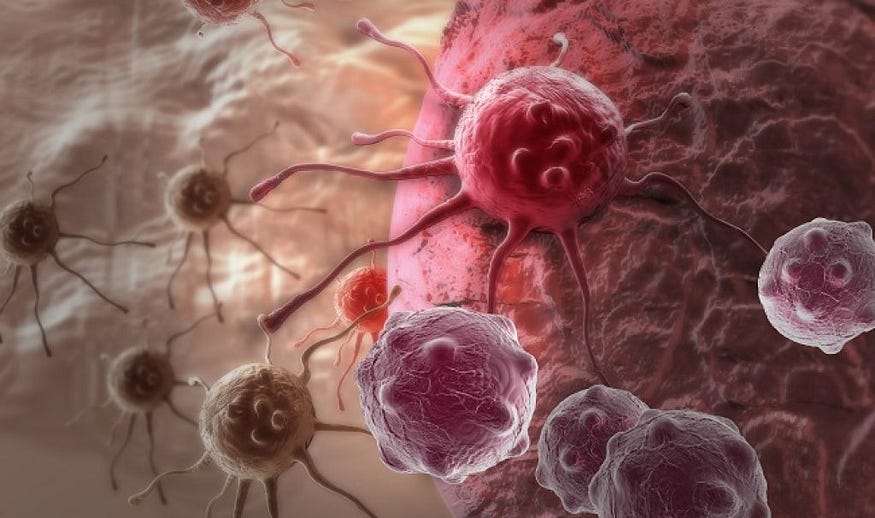
Machine Learning to Improve Analysis for Breast Cancer Screening
When it comes to treating breast cancer, one of the biggest hurdles isn’t what therapies we have, it’s which therapy to use, when, and for who. Janie Cai used machine-learning to help tailor treatment decisions in breast cancer, moving away from a “one size fits all” approach and toward smarter, data-driven choices. Traditional protocols rely on broad categories (tumor size, hormone receptor status, etc.), but this study asks, can we bring in many more patient-level variables and build a model that suggests the best therapy path?
Drawing from a publicly available dataset of breast cancer cases including variables like age, hormone receptor status, HER2 gene expression, and tumor stage, Janie trained several algorithms — Gradient Boosting, XGBoost, AdaBoost — to classify the most effective therapy pathway. The model chose chemotherapy, hormone therapy, or a combination, and achieved an accuracy of around 83%, a strong performance for this kind of clinical classification.
Importantly, the results were made interpretable. She used SHAP (SHapley Additive exPlanations) values to make the model interpretable, showing which features most influenced each decision. Age, HER2, and hormone receptor status consistently ranked as the strongest predictors, reinforcing known biology, but now with individualized weighting per patient.
Why does this matter? Because current treatment decisions rely on broad clinical categories, which don’t capture the nuance of each patient’s profile. This project points toward therapy selection guided by patterns in data, helping clinicians offer more targeted, evidence based care.
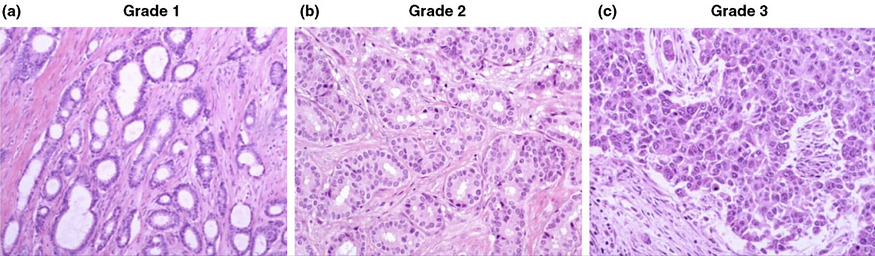
Spatial Pathology Analysis for Breast Cancer
In the evolving fight against breast cancer, understanding where the disease lives inside a tumor can be as important as knowing what it is. Jonathan Wang studied the architecture of cancer within the tissue, not just the cells, but their exact positions, neighbors, and structural patterns, to uncover clues about how outcomes may differ.
Using digitized histopathology slides of breast cancer tissue, he performed analysis techniques to map the environment around the tumor. He quantified the spatial relationships between malignant, or harmful, cells, immune cells, and stromal cells (the supportive tissue around the tumor). By measuring distances, clustering behaviors and cell neighborhood densities, they looked for patterns that might correlate with survival rates or risk of metastasis. The project found certain spatial signatures — e.g., dense immune cell infiltration, or large regions invisible to your immune system — appeared to be linked with worse prognosis. The tissue’s layout was able to provide information that standard tumor-grading methods miss. Jonathan’s work showed that the immune cells in relation to cancer cells matter when diagnosing breast cancer.
For too long, cancer research has focused on cell-type counts or gene expression alone, often neglecting the context around it. However, tumor behavior is in part a dialogue between cancer cells and their surroundings — the immune cells trying to fight them, the stroma shielding them, and the micro-vessels feeding them. By engaging with this spatial dimension, Jonathan’s research is helping to open a new window into breast cancer biology and into more refined prognostic tools.
The Next Chapter in Breast Cancer Research
Progress in science doesn’t always look like a miracle breakthrough, or a sudden revolutionary thought. More often, it’s the culmination of new questions we ask, the tools we use, and how we can approach things differently.
What unites all three of these student-led breast cancer research projects is a fundamental rethinking of how we approach the disease. From probing the physical mechanics of cancer cell movement to using machine learning for personalized treatment, these are real, rigorous contributions to one of the most urgent frontiers in medicine.
And they come at a critical time. For decades, the science surrounding women’s health has been underfunded, under researched, and dismissed. Now, that’s changing. Breast cancer is now one of the most fast advancing fields in cancer research. And as these students show, the next generation is already making a difference. The future of breast cancer research will not be driven by any one method or model, but by a combination of ideas, all working together. And as long as we continue to support the next generation of scientists, thinkers, and engineers who are already asking the right questions, the future of women’s health will be brighter, smarter, and more equitable than it has ever been.