
Author: Alana Lu
June 2nd, 2026
In Brief:
- Casgevy is the first FDA-approved CRISPR-based therapy for sickle cell disease, treating .
- It treats disease at the genetic level by editing hematopoietic stem cells rather than managing symptoms.
- The therapy increases fetal hemoglobin production, which prevents red blood cells from sickling under low oxygen conditions.
- Clinical trials show a significant reduction in vaso-occlusive crises and other severe complications.
- This development represents a shift in medicine from symptom-based treatment to targeted genetic intervention at the cellular level.
- Readers will learn how sickle cell disease develops, how CRISPR-Cas9 works, and how Casgevy is applied clinically as a treatment.
A teenager living with severe sickle cell disease can experience sudden, intense pain crises that interrupt school, sleep, and daily life without warning. For years, treatment has focused mainly on managing these symptoms rather than addressing the underlying cause. That approach is now beginning to change with the emergence of CRISPR-based gene editing therapies such as Casgevy, which target the disease at its genetic source.
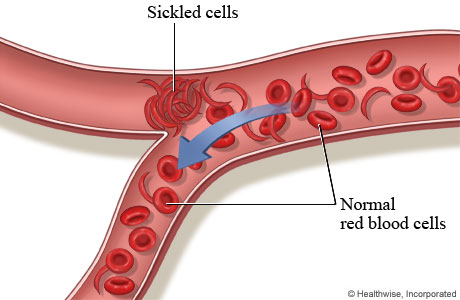
Sickle cell disease originates from a single-nucleotide mutation in the ?-globin gene. That small genetic change alters the structure of hemoglobin, the oxygen-carrying protein in red blood cells. Under low oxygen conditions, the altered hemoglobin tends to stick together, forming rigid fibers that distort normally flexible red blood cells into a sickle shape, as shown in Figure 2. These cells struggle to pass through blood vessels, restricting circulation and reducing oxygen delivery. The result is a cascade of clinical effects, including severe pain episodes, chronic anemia, stroke risk, and cumulative organ damage.
At the core of this process is a central principle in biology: genetic information flows from DNA to RNA to proteins. This pathway determines how instructions encoded in DNA ultimately become functional molecules inside cells. When a single nucleotide in DNA’s genetic code is mutated, the downstream effects can change protein structure in a way that reshapes how entire cells behave. In sickle cell disease, that molecular-level disruption scales into a systemic disorder affecting the circulatory system as a whole.
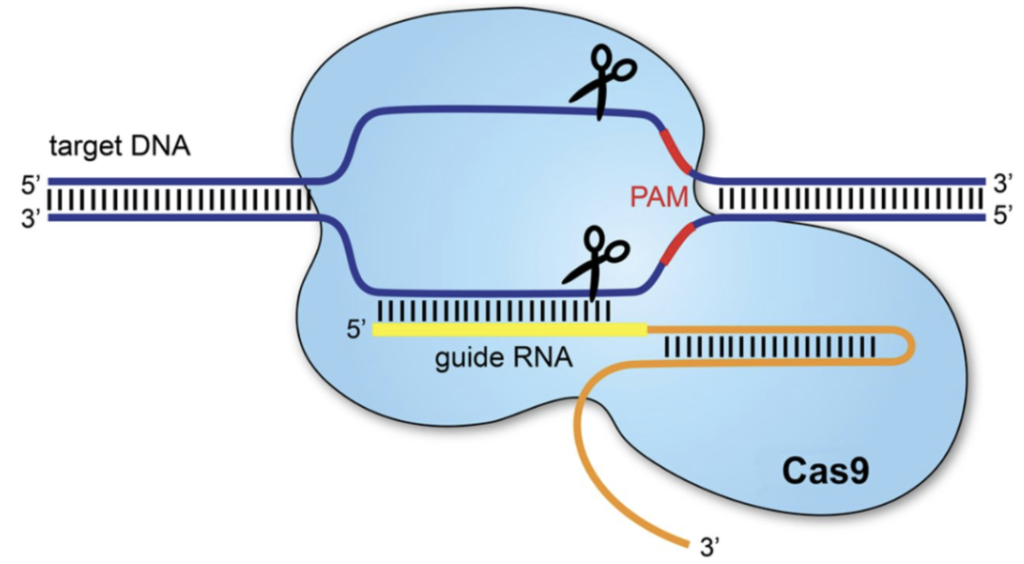
This connection between DNA and the translation of DNA to protein function is precisely what makes gene editing so powerful. CRISPR-Cas9 is a programmable gene-editing system that uses a guide RNA, a short RNA sequence that matches a target DNA sequence, to locate a specific DNA region, while the Cas9 enzyme makes a cut at that site. Once the DNA is cut, the cell activates its own DNA repair machinery. Rather than replacing entire genes, CRISPR leverages these repair processes to alter gene regulation in highly specific ways. In sickle cell disease, one major strategy is to increase fetal hemoglobin production, a form that does not sickle.
Adapted from Redman et al. (2016).
Casgevy, formally known as exagamglogene autotemcel, became the first CRISPR-based therapy approved by the U.S. Food and Drug Administration in 2023, as shown in Figure 3. Its approval marked a turning point in biomedical science: gene editing moved from controlled laboratory experimentation into regulated clinical medicine, directly impacting many patients.
Adapted from HealthLink BC (2022).
Biological Foundations: From Molecular Mechanism to Clinical Outcome
Gene regulation therapies add another layer of control over hemoglobin production. A key regulator of this process is the BCL11A gene, which suppresses fetal hemoglobin expression after infancy. In sickle cell disease therapy, this pathway becomes an important target: reducing BCL11A activity allows fetal hemoglobin production to persist into adulthood, providing an alternative oxygen-carrying mechanism that does not undergo sickling.
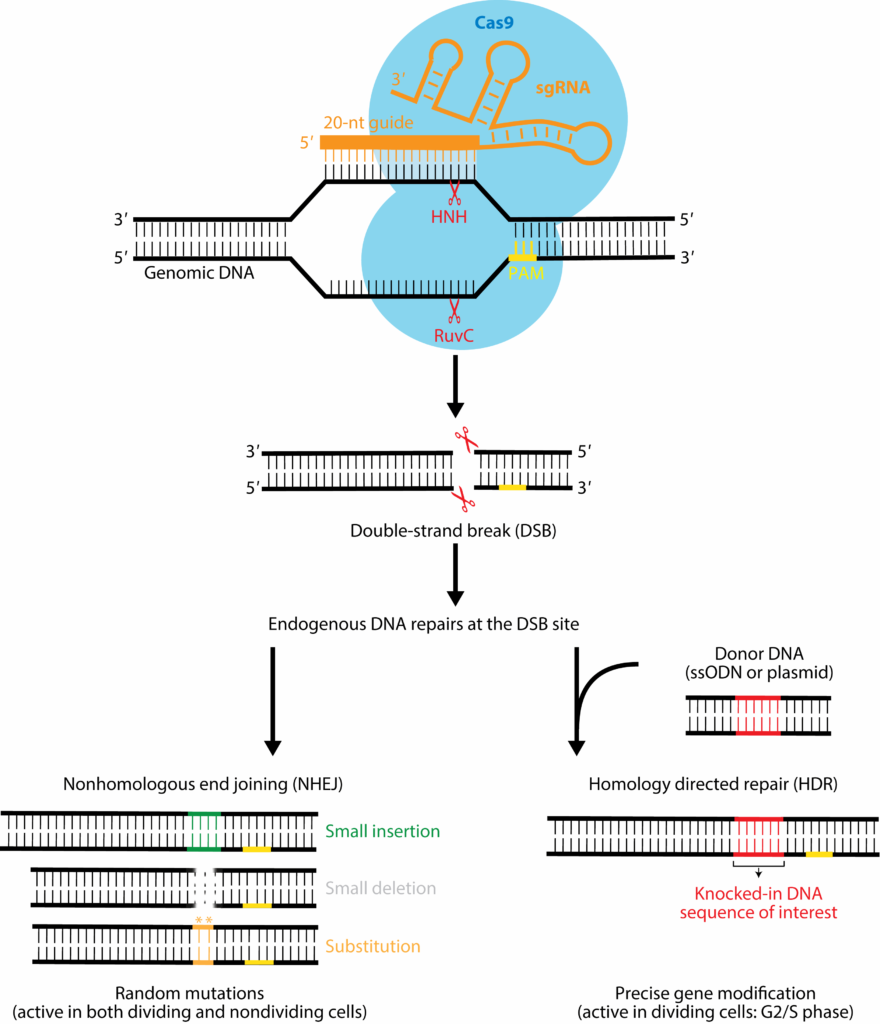
Natural DNA repair pathways also play an important role in how genetic changes are established within cells. Non-homologous end joining (NHEJ) repairs broken DNA ends but can introduce small insertions or deletions that alter gene function, while homology-directed repair (HDR) uses a template to make more precise genetic changes. Together, these processes influence how modifications to DNA are integrated and how gene activity is ultimately affected.
Together, these regulatory and repair systems form the biological foundation for modern gene-editing approaches in sickle cell disease. By utilizing the cell’s own control and repair machinery, targeted interventions can reduce BCL11A activity and increase fetal hemoglobin production in hematopoietic stem cells.
These mechanisms underpin CRISPR-based therapeutic strategies such as Casgevy, which targets the BCL11A regulatory pathway to produce sustained increases in fetal hemoglobin and reduce red blood cell sickling.
Adapted from Jiang and Doudna (2017).
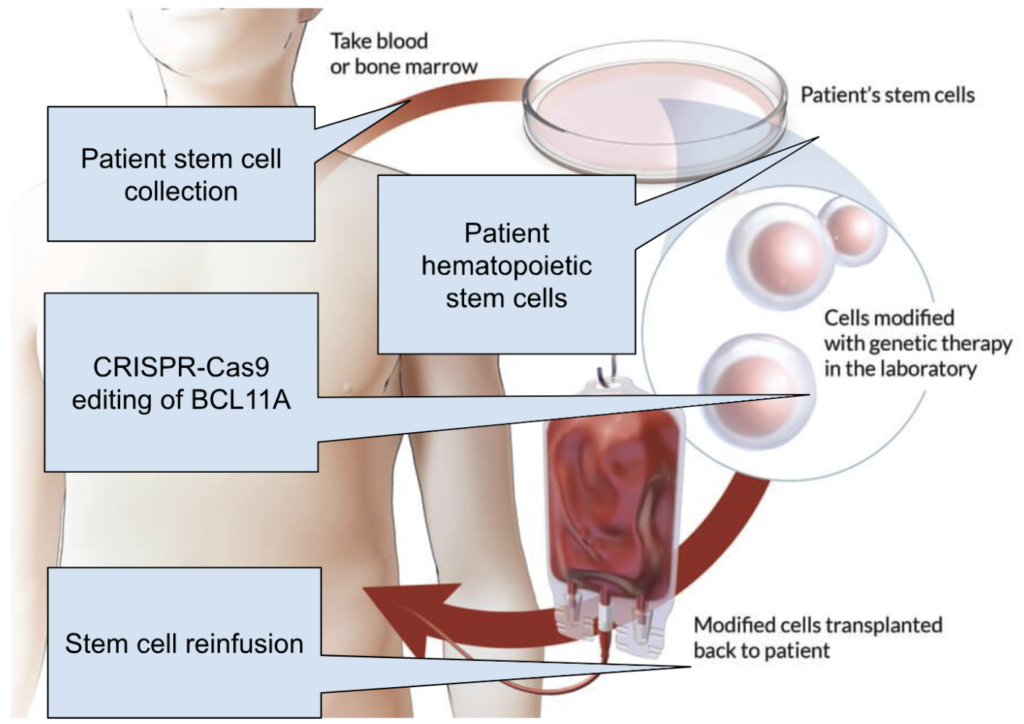
Casgevy uses an ex vivo approach, meaning gene editing occurs outside the body. Hematopoietic stem cells are collected from the patient, modified using CRISPR to target the BCL11A regulatory pathway, and then reinfused after conditioning therapy prepares the bone marrow. Once these edited cells engraft, they continuously produce red blood cells enriched with fetal hemoglobin, reducing sickling and improving oxygen delivery throughout the body.
Adapted from the National Heart, Lung, and Blood Institute (NHLBI, 2022).
Clinical Breakthrough: Casgevy
Exagamglogene autotemcel (Casgevy) represents the first CRISPR-based gene therapy approved for sickle cell disease. Approved in 2023 by the U.S. Food and Drug Administration, it became the first authorized treatment to use CRISPR technology in a clinical setting, establishing gene editing as a regulated therapeutic platform.
However, the body has a natural biological pathway that can counteract sickle cell disease, and Casgevy leverages this mechanism by targeting the BCL11A gene, which suppresses fetal hemoglobin production.
Casgevy uses CRISPR-Cas9 to reduce the activity of BCL11A, allowing fetal hemoglobin levels to increase and improving oxygen delivery in red blood cells. Hematopoietic stem cells are first harvested from the patient, then genetically modified outside the body using CRISPR-Cas9. After conditioning therapy clears space within the bone marrow, the edited cells are reinfused and allowed to engraft. From that point forward, they begin producing red blood cells with increased fetal hemoglobin.
Clinical trial results have shown substantial reductions in vaso-occlusive crises, which are painful episodes caused by blocked blood flow due to sickled red blood cells. By increasing fetal hemoglobin levels, the therapy reduces hemoglobin aggregation and prevents the formation of sickled cells that obstruct blood flow. Although long-term monitoring continues, early outcomes suggest durable improvement in disease severity.
Industry, Cost, and Accessibility
Casgevy faces a central dilemma in modern medicine: a potentially curative therapy exists, but ensuring access for patients who need it most remains a major challenge.
Despite its scientific significance, Casgevy highlights major structural limitations in modern gene therapy. The treatment requires individualized cell processing, specialized laboratory infrastructure, and tightly coordinated clinical procedures, all of which contribute to extremely high costs.
Access remains limited to specialized medical centers capable of performing stem cell extraction, genetic modification, and reinfusion. As a result, availability is uneven and largely dependent on healthcare system capacity.
At the same time, approval of Casgevy has accelerated investment in CRISPR-based biotechnology. Pharmaceutical development pipelines are increasingly focused on gene-editing therapies, while regulatory systems continue adapting to evaluate permanent genomic interventions.
Ethical and Scientific Limitations
Although CRISPR-based therapies show strong clinical promise, important uncertainties remain. Researchers continue to study long-term durability of edited cells as well as the potential for unintended off-target genetic changes. Because CRISPR permanently modifies DNA, long-term monitoring is essential for evaluating safety and stability.
Ethical questions also remain central to the technology’s development. Issues of equitable access, healthcare disparity, and appropriate boundaries for genetic intervention continue to shape public and scientific discussion. While current applications focus on severe disease, the broader implications of genome editing extend far beyond current clinical use.
For these reasons, CRISPR therapies operate under strict regulatory oversight, including extensive clinical testing and long-term follow-up requirements enforced by agencies such as the FDA.
Future Implications for Medicine and Research
The success of Casgevy suggests that CRISPR-based therapies may expand to additional genetic disorders, including muscular dystrophy, cystic fibrosis, and inherited immune diseases. Ongoing improvements in gene-editing precision aim to reduce off-target effects and increase safety.
Advances in manufacturing and delivery systems may also reduce treatment costs over time, improving accessibility. At the same time, continued refinement of molecular tools is expanding the range of diseases that can be targeted at the genetic level.
More broadly, CRISPR therapy reflects a shift in medicine from symptom management toward direct modification of underlying genetic causes, representing a structural change in how disease is understood and treated at the molecular level.
Conclusion
Casgevy represents the transition of CRISPR gene editing from experimental biology to approved clinical therapy for sickle cell disease. Its development demonstrates how molecular genetics research can move into real-world medical application with measurable patient outcomes.
At the same time, it highlights persistent scientific, ethical, and economic challenges that continue to shape the future of gene-editing medicine. Questions surrounding safety, cost, and access remain central as the field evolves.
Even with these limitations, Casgevy marks a defining milestone in modern biomedical science. As CRISPR-based therapies expand, they are likely to reshape not only how genetic disease is treated, but how it is fundamentally understood.
References
- Frangoul, H., Altshuler, D., Cappellini, M. D., et al. (2021). CRISPR-Cas9 gene editing for sickle cell disease and ?-thalassemia. New England Journal of Medicine, 384(3), 252–260. https://www.nejm.org/doi/full/10.1056/NEJMoa2031054
- Jiang, F., & Doudna, J. A. (2017). CRISPR–Cas9 structures and mechanisms. Annual Review of Biophysics, 46, 505–529. https://www.annualreviews.org/content/journals/10.1146/annurev-biophys-062215-010822
- HealthLink BC. (2022). Sickle cell disease. Healthwise. https://www.healthlinkbc.ca/health-library/health-topics/sickle-cell-disease
- Locatelli, F., Lang, P., Wall, D., et al. (2024). Exagamglogene autotemcel for severe sickle cell disease. New England Journal of Medicine, 390(18), 1649–1662. https://www.nejm.org/doi/full/10.1056/NEJMoa2309676
- National Center for Biotechnology Information. (2023). Efficacy and safety of a single dose of exagamglogene autotemcel for transfusion-dependent ?-thalassemia and severe sickle cell disease. https://pmc.ncbi.nlm.nih.gov/articles/PMC10112499/
- National Heart, Lung, and Blood Institute (NHLBI). (2022). Genetic therapies for blood and immune conditions. U.S. National Institutes of Health. https://www.nhlbi.nih.gov/health/genetic-therapies/treatments
- New England Journal of Medicine. (2021). Post-transcriptional genetic silencing of BCL11A to treat sickle cell disease. https://www.nejm.org/doi/full/10.1056/NEJMoa2029392
- Pharmaceutical Technology. (2024). Casgevy: Launch sequence and price analysis of the first marketed CRISPR therapy. https://www.pharmaceutical-technology.com/pricing-and-market-access/casgevy-launch-crispr-therapy/
- Redman, M., King, A., Watson, C., & King, D. (2016). What is CRISPR/Cas9? Archives of Disease in Childhood: Education and Practice, 101(4). https://doi.org/10.1136/archdischild-2016-310459
- U.S. Food and Drug Administration. (2023). Casgevy. https://www.fda.gov/vaccines-blood-biologics/casgevy
- Suhail, M. (2024). Biophysical chemistry behind sickle cell anemia and the mechanism of voxelotor action. Scientific Reports, 14, 1861. https://doi.org/10.1038/s41598-024-52476-8