

Toxic Masculinity: the Scientific and Societal Perspectives of the Mask
Toxic masculinity is a system of social expectations that separates what it means to be a “man” and a “woman”, but why do these beliefs grow, what are their impacts, and how can they be resolved?
In Brief
- Traditional toxic masculinity is based on 3 factors: emotional suppression, aggression, and self reliance.
- Emotional suppression changes brain physiology
- Anger and dominance creates issues with socializing
- The impact may create difficulties in SSRI treatment
- Instead, somatic therapy may reverse some of the brain physiology changes.
Intro
Social media is a tool for people to express themselves. But if you go on any social media platform, you can see a guy posting unbothered fitness pictures, with corny slogans and stoic expressions. Yet, behind the scenes, they may be suffering from anxiety and loneliness. Society pushes the idea that individuals should hide behind a mask of being unemotional, and this can lead to neurological changes in the brain.
The general definition is,
the cultural pressure on men and boys to conform to rigid, restrictive gender norms
But what does this actually mean? Is there data to prove this?
Toxic masculinity usually needs 3 factors:
- Emotional suppression
- Aggression and dominance
- Extreme self reliance
Toxic masculinity is a system of social expectations that separates what it means to be a “man” and a “woman”.
Traditional Toxic Masculinity
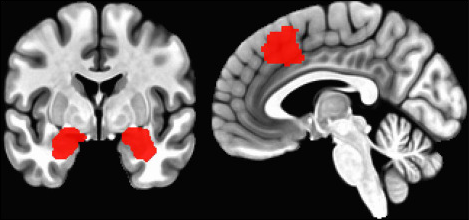
Men are usually told to suppress their emotions since childhood because it does not fit the stereotypical picture of what a man is supposed to do. The emotional suppression can alter the brain by affecting the amygdala, the part of the brain that controls emotional and threat regulation. If a person continuously perceives everyone as a threat and suppresses other emotions, it raises cortisol levels. This can consistently raise cortisol levels over time, even in situations that do not need extreme measures. This can lead to emotional outbursts and can unnecessarily trigger “fight or flight” responses in safe situations.
Schematic representation of amygdala-prefrontal connectivity. Adapted from “Anxiety shapes amygdala-prefrontal dynamics during movie watching”, by Kirk, P. A., Holmes, A. J., & Robinson, O. J., 2023, Biological Psychiatry Global Open Science.
People are more than twice as likely to be diagnosed with clinical depression and three times more likely to encounter memory loss in high stress events due to the hippocampus also shrinking. By continuously triggering stress responses, it creates a cycle of enlarging the amygdala and increasing anxiety, which could potentially cause more stress, which can create patterns of unhealthy behavior that show up in all areas of life.
Additionally, because individuals are told to be “unemotional”, they miss out on opportunities of oxytocin, otherwise known as the “love hormone”, a vital component of social connection. The lack of social connection can drive a person further down a path of depression and anxiety.
As a result, anger and dominance may be demonstrated as the only “acceptable” output for stress. Because of this, many men use it as a tool to maintain emotional distance with others and create favorable power dynamics. These power dynamics are usually created based on physical traits, such as who is more fit, or who has the least amount of perceived “feminine” qualities. In group settings, need for dominance can create insecurities and conflicts between people in a way that perpetuates the need for feelings of power. Traditional toxic masculinity has many different signals with emotional suppression, anger and dominance, and how these traits can affect a person–mentally and scientifically.
Impact
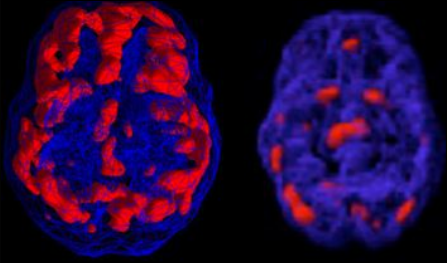
Comparison of normal vs. depressed baseline brain metabolism via SPECT imaging. From “Brain SPECT Scans in Depression”, by Amen Clinics, 2019, Dr. Sarah Edwards Portal.
Traditional toxic masculinity can lead to impacts in the brain and how society can change their daily life. The brain scan above displays the increased amount of cortisol (red) that comprise overly anxious brains. The scan on the right shows a healthy brain while the one on the left has been exposed to too much cortisol, flooding other components of the brain. Emotional suppression often leaves individuals in double jeopardy–since vulnerability is viewed as a weakness, people typically do not seek medicinal help or community support. This makes receiving clinical treatment and therapy more difficult because the emotional suppression functions as a barrier, making it harder for standard, talk-heavy therapy sessions. As a result, annually,
- 1 in 5 men are diagnosed with a mental health condition, but only about 41.6% of men receive treatment
- For reference, 57% of women seek help for a mental health condition.
- Men could feel this way due to fear of not conforming to “normal” behavior.
- For reference, 57% of women seek help for a mental health condition.
- Men have accounted for roughly 78% of all suicides.
As stated earlier, people will typically not seek medicinal help because of society’s effect on them. Instead, people may attempt to “fix” the problem themself. By rewiring the brain's thinking, the brain can no longer respond to standard depression treatments. Depression is normally treated with SSRIs (selective serotonin reuptake inhibitors). However, SSRIs depend on the neuroplasticity of a healthy hippocampus to stimulate new neurons to improve mood. Since emotional suppression shrinks the hippocampus, if a clinician prescribes SSRI to a person whose hippocampus has been structurally damaged over time, the medication is significantly less likely to work, as the neurological architecture that the treatment requires has been degraded.
Consequently, the physiological changes in the brain that result from emotional suppression because traditional therapies typically used for depressed patients are not as effective. Instead, modern solutions must accommodate the biology and adjustments in the brain over long periods of emotional suppression in toxic masculinity.
Solution
Although having to confront toxic masculinity is still a common experience, destigmatizing language is slowly becoming more widespread, encouraging more people to process their emotions and become more vulnerable and open to treatment. Additionally, the neurological effects of toxic masculinity can be reversed since the brain can adapt in response to positive emotional changes.
Currently, somatic and mind-body integration is being tested as a treatment for these types of mental health issues. Since chronic emotional suppression locks emotion in the body, modern treatment uses heavy physical routines to try and use continuous loops in the routine to try and deregulate a hyper-aware amygdala. The physical routines can include tracking sleep cycles, regulated strength training, and monitoring cardiovascular health. More research is being released to learn more about the effects of toxic masculinity and how society as a whole can fight against it.
References
American Psychological Association. (2018). APA guidelines for psychological practice with boys and men. American Psychological Association.
Goldin, P. R., McRae, K., Ramel, W., & Gross, J. J. (2008). The neural bases of emotion regulation: Reappraisal and suppression of negative emotion. Biological Psychiatry, 63(6), 577-586. https://doi.org/10.1016/j.biopsych.2007.05.031
Hogeveen, J., & Grafman, J. (2021). Alexithymia. Handbook of Clinical Neurology, 47-62. https://doi.org/10.1016/b978-0-12-822290-4.00004-9
Munsch, C. (2016). Relative income, psychological well-being, and health: Is breadwinning hazardous or protective? American Sociological Review, 81(4), 705-727.
The impact of traditional masculinity norms on men's willingness to seek mental health support: A systematic review of literature. (2025). American Journal of Men's Health, 19(3), 1-15. PubMed Central. pmc.ncbi.nlm.nih.gov/articles/PMC12117241/