
Personalized Cancer Vaccines
Cancer is rapidly changing and evolving, and differs between every patient. Using specific information from patient tumors, personalized vaccines can be developed to help combat the patient's specific cancer more effectively
In Brief
- Every person’s cancer carries a different combination of genetic mutations, giving each tumor its own set of possible immune targets.
- Personalized cancer vaccines use information from a patient’s tumor to train the immune system to recognize and attack that specific cancer.
- Advances in genetic sequencing, computer-based tumor analysis, and mRNA technology have made these individualized treatments faster and more practical to develop.
- Clinical trials are testing personalized cancer vaccines across multiple cancer types, with researchers investigating how these treatments can improve cancer care.
- Larger trials are still underway, but personalized cancer vaccines could help move cancer care toward treatments designed around each patient’s unique biology.
Imagine being told that your next vaccine was designed for only one person—you. Scientists would analyze the genetic information in your tumor, identify features that separate your cancer cells from healthy cells, and use those findings to build a treatment specifically for your body. Unlike the vaccines most people receive to prevent infections, this vaccine would be given after cancer develops. Its goal would be to help your immune system recognize the cancer and fight it more effectively.
Cancer has traditionally been treated with surgery, chemotherapy, radiation therapy, and immunotherapy. These treatments have improved outcomes for many patients, but cancer does not look exactly the same in every person. Even two patients diagnosed with the same type of cancer can have tumors driven by different genetic mutations. A treatment that works well for one patient may therefore be less effective for another.
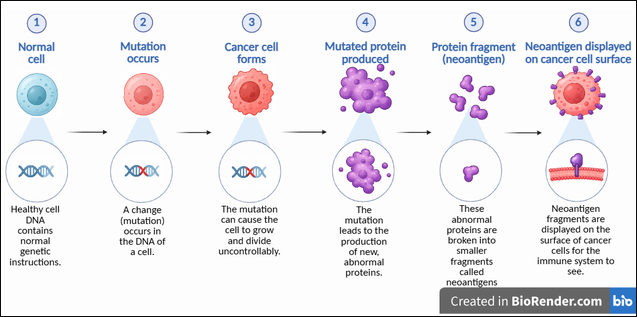
As a tumor develops, mutations can cause cancer cells to produce unusual proteins that differ from those found in healthy cells. These proteins act as potential targets for the immune system to recognize and bind to. This idea is the foundation of personalized cancer vaccines. Because these proteins vary from patient to patient, a single vaccine is unlikely to recognize every person's cancer equally well. Personalized cancer vaccines solve this problem by using information from an individual tumor to identify the best targets for that patient's immune system.
Figure 1. Genetic mutations in tumor cells create unique neoantigens that serve as the personalized targets used to design individualized cancer vaccines. Created with BioRender.com.
Until recently, creating a separate vaccine for every patient was difficult to imagine on a practical scale. Today, faster DNA sequencing, improved computer analysis, and advances in mRNA technology have made it possible to design individualized vaccines much more quickly than before. These treatments are still experimental, but the field is progressing rapidly. Researchers are now testing personalized cancer vaccines in clinical trials across several cancer types. Although these treatments are still experimental, early results have shown that individualized vaccines can be created and safely evaluated in patients. Larger trials are still needed to determine how effective these treatments will be across broader populations.
This technology could also provide another line of defense against cancer cells left behind for patients who have already undergone surgery, helping to reduce the likelihood that cancer will return.
Recent advances in personalized mRNA cancer vaccines show how scientists are beginning to turn precision oncology from an idea into a practical treatment, designing therapies around each patient's unique biology while producing them quickly enough to make a clinical difference.
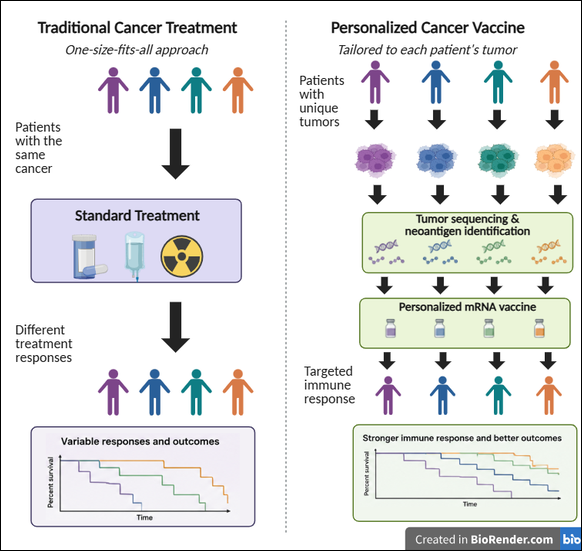
Figure 2. Traditional cancer treatments use standardized therapies, while personalized cancer vaccines are designed around the unique genetic features of each patient's tumor. Created with BioRender.com.
Why Every Tumor Is Different
No two cancers follow exactly the same path. Cancer begins when DNA inside a cell gradually accumulates mutations—changes in the genetic instructions that tell cells how to grow, divide, and function. Some of these mutations have little effect, but others allow cells to multiply uncontrollably, avoid normal repair systems, and eventually form a tumor. Because mutations build up over time in different ways, every person's cancer develops its own unique genetic fingerprint.
Those mutations do more than change how cancer behaves. They can also cause cancer cells to produce abnormal proteins that healthy cells do not make. When these proteins are broken down, small fragments called neoantigens appear on the surface of cancer cells. You can think of neoantigens as tiny identification tags that signal something about the cell is different, giving the immune system a chance to recognize it as abnormal. As shown in Figure 3, these neoantigens can become targets for T cells.
The challenge is that each patient's collection of neoantigens is different. A melanoma in one patient may display hundreds of neoantigens that are completely different from those found in another person's melanoma. Even patients diagnosed with the same cancer type can have tumors with very different mutation patterns. As a result, a vaccine designed for one person's cancer would likely miss the targets found in someone else's.
This realization changed how scientists thought about therapeutic cancer vaccines. Earlier approaches often targeted proteins that many tumors shared, hoping a single vaccine could work for large groups of patients. While those strategies improved researchers' understanding of cancer immunotherapy, they produced limited success because they could not account for the extraordinary genetic diversity found from one tumor to another.
Personalized cancer vaccines take a different approach. Instead of searching for one target that every patient shares, researchers begin with the patient's own tumor. After sequencing the tumor's DNA, they identify the neoantigens most likely to trigger an immune response and use that information to create an individualized vaccine. In other words, the treatment is built around the biology of the patient rather than expecting the patient to fit the treatment.
Recognizing that every tumor is genetically unique answered one important question: why a universal cancer vaccine was unlikely to succeed. It also raised a far more difficult one. Could scientists identify those unique neoantigens, manufacture a personalized vaccine within weeks, and deliver it in time to help patients before their cancer returned? That question has driven some of the most significant advances in cancer immunotherapy over the past few years and set the stage for the breakthroughs now transforming cancer treatment.
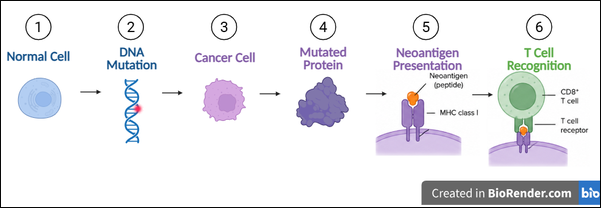
Figure 3. Each tumor's unique neoantigens allow T cells to recognize cancer cells, forming the biological foundation of personalized cancer vaccines. Created with BioRender.com.
Current State of Personalized Cancer Vaccines (2024–2026)
Just a few years ago, designing a personalized cancer vaccine for every patient sounded more like a long-term goal than a realistic treatment strategy. Today, the field looks very different. Advances in DNA sequencing, computational biology, and mRNA technology have made it possible for researchers to develop individualized vaccines quickly enough to test them in clinical trials, transforming personalized cancer vaccines into one of the most rapidly advancing areas of precision oncology.
Once a patient's tumor is removed or biopsied, the race to create a personalized vaccine begins. Scientists sequence the tumor's DNA and compare it with healthy cells to pinpoint the mutations unique to that cancer. Computer algorithms then analyze thousands of possible neoantigens, identifying those most likely to trigger a strong immune response. Using that information, researchers design an individualized mRNA vaccine that teaches the immune system what to recognize if cancer cells remain in the body. Every step must happen quickly enough for the vaccine to be ready before the patient's cancer has a chance to return. As shown in Figure 4, speed is essential because tumor analysis, target selection, vaccine production, and treatment must all be completed within a limited clinical window.
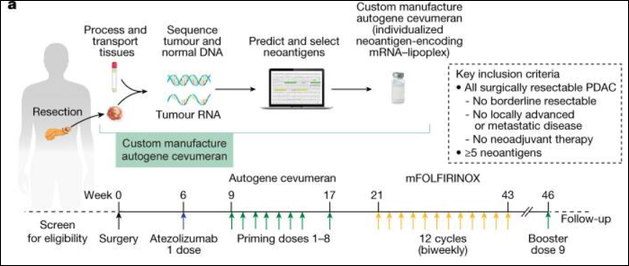
Figure 4. Developing a personalized mRNA cancer vaccine requires rapid tumor sequencing, neoantigen selection, vaccine manufacturing, and treatment within a limited clinical window. Adapted from Rojas et al. (2023).
Researchers can now complete each of these steps far more efficiently than they could just a few years ago. Personalized vaccines are being studied alongside established immunotherapies, including immune checkpoint inhibitors such as pembrolizumab, because the two approaches may complement one another. While the vaccine teaches the immune system what to recognize, immunotherapy helps remove some of the biological "brakes" that can prevent immune cells from attacking tumors. Together, these treatments are being evaluated in clinical trials involving melanoma, pancreatic cancer, glioblastoma, and several other cancer types.
Despite this rapid progress, important challenges remain. Every vaccine must still be designed and manufactured for a single patient, making the process more complex and expensive than producing a standard treatment. Researchers also continue to refine how neoantigens are selected, shorten manufacturing times, and determine which patients are most likely to benefit. Most importantly, although several early studies have reported encouraging results, larger Phase III clinical trials are still needed before personalized cancer vaccines can become part of routine cancer care.
Even with these challenges, the field has reached an important turning point. Scientists have shown that personalized vaccines can be created, safely delivered, and tested in patients. The next challenge was determining whether this approach could improve patient outcomes in a large clinical trial. Among these developments, one clinical trial became a major milestone in showing what personalized cancer vaccines could accomplish.
Breakthrough Story: The KEYNOTE-942 Trial
By the late 2010s, scientists had already reached an important conclusion: every patient's cancer was different. Sequencing technologies had revealed that tumors carried unique combinations of mutations, and researchers knew those mutations could produce neoantigens capable of attracting the immune system's attention. The biology made sense. The problem was turning that idea into a treatment.
Imagine trying to develop a brand-new treatment for every single patient. Every patient presented researchers with a completely new puzzle. Before treatment could even begin, they had to collect the tumor, decode its DNA, determine which mutations were most likely to alert the immune system, manufacture an entirely new vaccine, and complete safety testing—all within a matter of weeks. Meanwhile, the possibility that the patient's cancer could return meant there was little time to waste.
That challenge shaped the next generation of cancer vaccine research. To solve it, researchers first had to rethink how cancer vaccines were designed.
Earlier therapeutic cancer vaccines often targeted proteins shared by many patients, with the hope that a single vaccine could treat large groups of people. Although these studies helped researchers better understand cancer immunotherapy, the results were often limited because tumors varied so much from one patient to another. Scientists began asking a new question: instead of searching for one vaccine that fit everyone, what if every patient received a vaccine built specifically for their own cancer?
Answering that question required several scientific breakthroughs to come together at the same time.
The first was rapid genomic sequencing. Improvements in sequencing technology allowed researchers to identify thousands of mutations within an individual's tumor much faster than before. At the same time, advances in computational biology made it possible to analyze enormous amounts of genetic data and predict which neoantigens were most likely to produce a strong immune response. Instead of relying solely on laboratory experiments, researchers could now use sophisticated algorithms to narrow down the best vaccine targets.
The second breakthrough came from mRNA technology. During the COVID-19 pandemic, mRNA vaccines demonstrated that genetic instructions could be produced quickly and delivered safely to train the immune system. Cancer researchers realized they could adapt the same platform for a completely different purpose. Rather than encoding part of a virus, an mRNA cancer vaccine could encode neoantigens unique to one patient's tumor, allowing the immune system to recognize cancer cells that carried those mutations.
These advances laid the foundation for the KEYNOTE-942 clinical trial.
The study enrolled patients with high-risk stage III and stage IV melanoma whose tumors had been completely removed through surgery but still carried a substantial risk of recurring. For each participant, researchers developed an individualized mRNA vaccine, known as mRNA-4157 (V940), by sequencing the patient's tumor and selecting up to 34 neoantigens predicted to generate the strongest immune response. The vaccine was then given alongside pembrolizumab, an immune checkpoint inhibitor already used to treat melanoma. The researchers hoped the combination would not only teach the immune system what to attack but also help immune cells respond more effectively once they recognized those targets.
The results drew international attention. According to Weber et al. (2024), the Phase IIb trial showed that patients receiving the personalized vaccine together with pembrolizumab had a lower risk of cancer recurrence or death than patients receiving pembrolizumab alone. Follow-up results reported in 2026 showed that this benefit remained durable after five years, strengthening confidence that individualized mRNA vaccines could provide lasting protection for some patients after surgery. At the same time, researchers emphasized that a larger Phase III trial is still underway to determine whether these findings can be confirmed in a broader population.
The significance of the trial extends beyond melanoma. For decades, personalized cancer vaccines remained largely theoretical because researchers lacked the technology to create them quickly enough for clinical use. KEYNOTE-942 demonstrated that scientists could sequence a patient's tumor, design a unique vaccine, manufacture it within the limited treatment window, and combine it successfully with an existing immunotherapy. It did not prove that personalized cancer vaccines are ready to replace current cancer treatments. It did, however, provide some of the strongest clinical evidence to date that individualized vaccines can become a practical part of precision oncology.
Perhaps the greatest achievement wasn't a number reported in the study at all. It was showing that a treatment designed for one patient—and one patient alone—could be developed on a timeline fast enough to be tested in real-world cancer care. That accomplishment has helped shape a new direction for cancer research, one in which therapies are increasingly designed around the biology of the individual instead of the average patient.
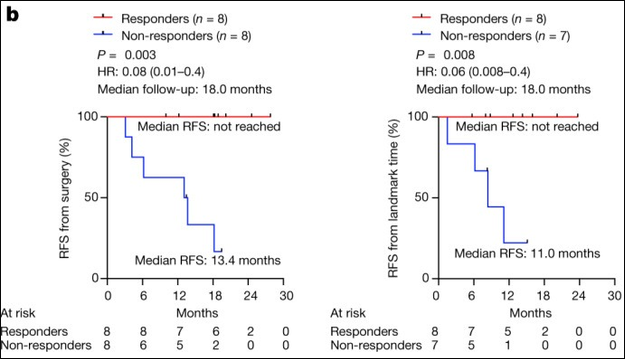
Figure 5. Patients who developed stronger vaccine-induced T-cell immune responses remained cancer-free for longer, illustrating how personalized cancer vaccines may help reduce the risk of cancer recurrence. Adapted from Rojas et al. (2023).
Remaining Challenges
The success of the KEYNOTE-942 trial marks an important step forward, but personalized cancer vaccines are still in the early stages of clinical development. Before these treatments can become part of routine cancer care, researchers must overcome challenges that are specific to designing a separate therapy for each patient.
One of the greatest obstacles is the complexity of personalized vaccine production. Unlike traditional vaccines, which are manufactured in large batches, each personalized cancer vaccine must be created for an individual patient. Scientists must sequence the tumor’s DNA, identify the most promising neoantigens, design the vaccine, and complete quality testing before treatment can begin. Although advances in technology have made this process much faster, researchers must continue improving manufacturing speed and efficiency to ensure vaccines can be produced within a clinically useful timeframe.
Another major challenge is determining how well these treatments will work across larger and more diverse patient populations. While studies such as KEYNOTE-942 have shown encouraging results, larger Phase III clinical trials are still needed to confirm whether personalized cancer vaccines consistently improve outcomes. These studies will also help researchers identify which patients are most likely to benefit and how these vaccines can best be combined with other cancer therapies.
These challenges are significant, but they are also the focus of ongoing research. Scientists have demonstrated that personalized cancer vaccines can be created and tested in clinical settings. The next step is making these treatments faster, more accessible, and reliable enough to become a routine part of cancer care.
Why This Matters: Future Implications and Career Connections
Personalized cancer vaccines represent a much larger shift in medicine than the development of a single new treatment. For decades, many cancer therapies were designed to treat groups of patients with the same diagnosis. Today, researchers are moving toward precision oncology—an approach that uses a patient's own genetic information to guide treatment decisions. Instead of asking, "What works for this type of cancer?" researchers are increasingly asking, "What will work best for this individual patient?"
If this approach continues to succeed, the impact could extend far beyond melanoma. Researchers are already studying personalized vaccines for pancreatic cancer, glioblastoma, colorectal cancer, and several other cancers. At the same time, scientists are exploring new ways to improve every step of the process. More accurate neoantigen prediction, artificial intelligence-assisted vaccine design, faster manufacturing methods, and combinations with emerging immunotherapies could make personalized treatments more effective and available to more patients in the future.
The potential healthcare impact is significant. Treatments designed around a patient's unique tumor may improve outcomes while reducing unnecessary therapies that are less likely to be effective. Although personalized cancer vaccines are unlikely to replace surgery, chemotherapy, radiation therapy, or immunotherapy, they may become an important addition to these treatments by helping the immune system recognize and eliminate cancer cells that remain after initial therapy.
This research is also creating opportunities for people interested in science and medicine. Developing a personalized cancer vaccine requires experts from many different fields working together. Molecular biologists investigate the genetic mutations within tumors, bioinformaticians and computer scientists develop algorithms to identify the most promising neoantigens, immunologists study how immune cells recognize cancer, and biomedical engineers work to improve vaccine manufacturing. Clinical researchers then evaluate these treatments in carefully designed trials. Progress depends on all of these disciplines working together toward the same goal.
If you enjoy biology, computer science, engineering, chemistry, or medicine, personalized cancer vaccines demonstrate how those subjects can intersect to solve real healthcare problems. A student interested in coding might one day develop algorithms that identify neoantigens more accurately. Someone fascinated by biology could study how immune cells recognize cancer. An aspiring physician might eventually use personalized vaccines as part of a patient's treatment plan. Advances like these show that scientific breakthroughs rarely come from one discipline—they emerge when researchers with different expertise work toward the same goal.
Ultimately, personalized cancer vaccines demonstrate how genetics, computational biology, immunology, and biotechnology are converging to reshape modern medicine. While important challenges remain, the progress made over the past few years suggests that future cancer treatments may become increasingly tailored to the biology of each individual patient. What once seemed like a distant possibility is steadily becoming a reality in precision oncology.
Conclusion
Not long ago, the idea of creating a different cancer vaccine for every patient seemed unrealistic. Scientists understood that every tumor carried its own unique genetic mutations, but identifying those mutations, designing an individualized treatment, and producing it quickly enough for patients remained beyond the limits of available technology. Advances in genomic sequencing, computational biology, and mRNA technology have changed that. As these fields converged, researchers gained the tools needed to transform a scientific concept into a treatment that could be tested in patients.
The KEYNOTE-942 clinical trial represents one of the clearest examples of that progress. Rather than relying on a one-size-fits-all approach, researchers demonstrated that an mRNA vaccine could be designed around the biology of an individual patient's tumor and successfully combined with immunotherapy in a clinical setting. While larger Phase III trials are still needed to confirm these results across broader patient populations, the trial has provided some of the strongest evidence to date that personalized cancer vaccines can become a practical part of precision oncology.
Personalized cancer vaccines are not a cure, and important scientific and logistical challenges still lie ahead. Even so, they offer a glimpse of how medicine is changing—from treating diseases with standardized therapies to designing treatments around each patient's unique biology. As research continues to advance, today's experimental vaccines may become tomorrow's standard of care.
References
- American Association for Cancer Research (AACR). (2024). Personalized neoantigen vaccines boost progress against aggressive cancers. https://www.aacr.org/blog/2024/04/10/personalized-neoantigen-vaccines-boost-progress-against-aggressive-cancers/
- ClinicalTrials.gov. (2026). A study of mRNA-4157/V940 in combination with pembrolizumab in participants with high-risk melanoma (NCT03897881). https://clinicaltrials.gov/study/NCT03897881
- Genome Medicine. (2024). Neoantigen DNA vaccines are safe, feasible, and induce neoantigen-specific immune responses in triple-negative breast cancer patients. https://link.springer.com/article/10.1186/s13073-024-01388-3
- Journal of Clinical Oncology. (2024). Individualized neoantigen therapy mRNA-4157 (V940) plus pembrolizumab in resected melanoma: 3-year update from the mRNA-4157-P201/KEYNOTE-942 trial. https://doi.org/10.1200/JCO.2024.42.17_suppl.LBA9512
- MIT Technology Review. (2024). Cancer vaccines are having a renaissance. https://www.technologyreview.com/2024/05/03/1092026/cancer-vaccines-are-having-a-renaissance/
- National Cancer Institute. (2019). Cancer vaccines. https://www.cancer.gov/about-cancer/treatment/types/immunotherapy/cancer-vaccines
- Nature Communications. (2024). A real-world observation of patients with glioblastoma treated with a personalized peptide vaccine. https://www.nature.com/articles/s41467-024-51315-8
- Nature News. (2024). How personalized cancer vaccines could keep tumours from coming back. https://doi.org/10.1038/d41586-024-01717-x
- Nature Reviews Clinical Oncology. (2024). Cancer mRNA vaccines: Clinical advances and future opportunities. https://www.nature.com/articles/s41571-024-00902-1
- Rojas, L. A., Sethna, Z., Soares, K. C., Olcese, C., Pang, N., Patterson, E., et al. (2023). Personalized RNA neoantigen vaccines stimulate T cells in pancreatic cancer. Nature. https://pmc.ncbi.nlm.nih.gov/articles/PMC10171177/
- Science. (2024). Progress on RNA-based cancer vaccines. https://www.science.org/content/blog-post/progress-rna-based-cancer-vaccines
- Weber, J. S., Carlino, M. S., Khattak, A., Meniawy, T., Ansstas, G., Taylor, M. H., et al. (2024). Individualised neoantigen therapy mRNA-4157 (V940) plus pembrolizumab versus pembrolizumab monotherapy in resected melanoma (KEYNOTE-942): A randomised, phase 2b study. The Lancet. https://www.thelancet.com/journals/lancet/article/PIIS0140-6736(23)02268-7/abstract